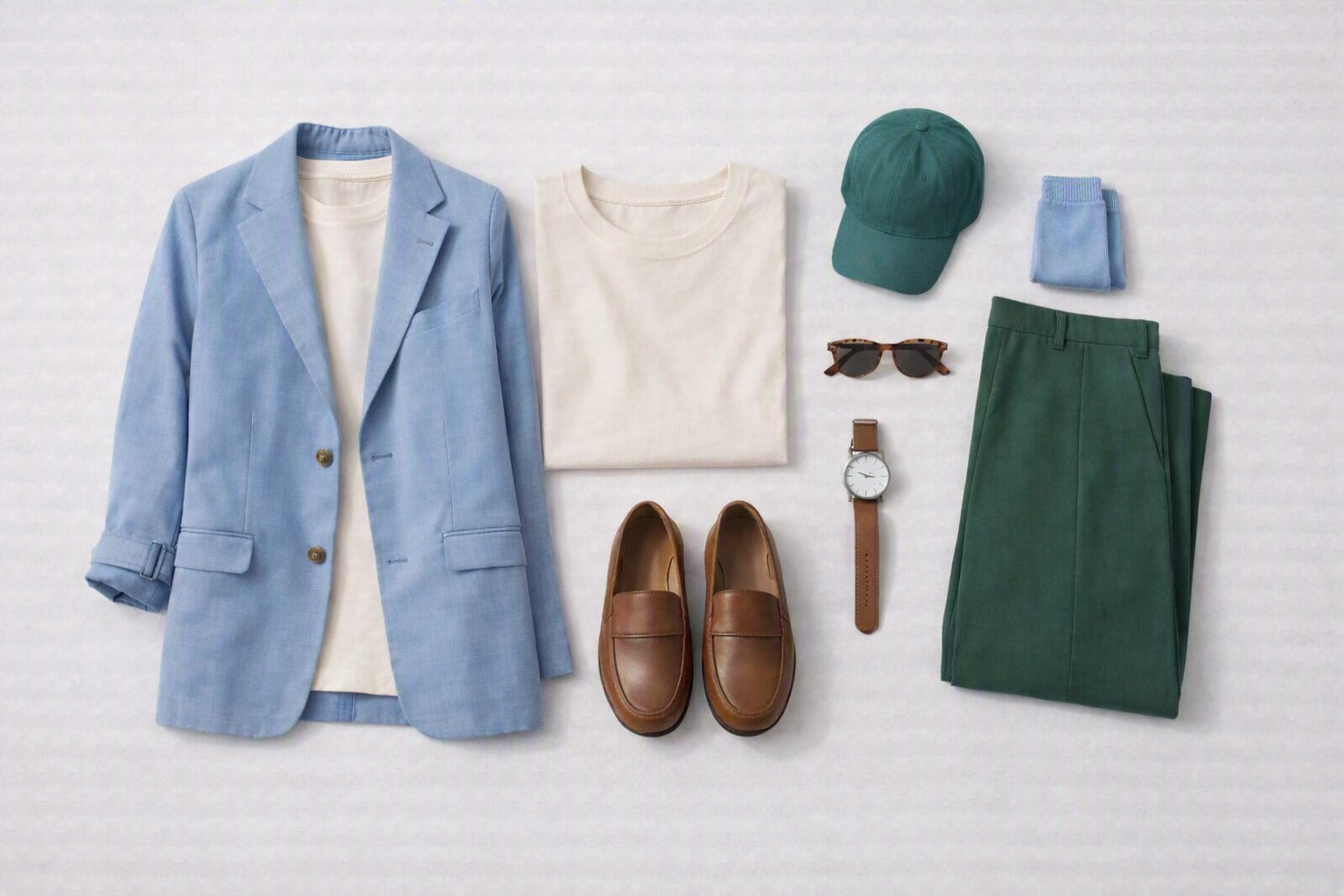
Learning how to match colors in an outfit is one of the fastest ways to look pulled together, and the best part is that it comes down to a few simple ideas rather than some secret talent. Once you understand how colors relate to each other on the color wheel, you can put together combinations that feel intentional every time you get dressed.
Start with the color wheel
Nearly every color rule traces back to one tool: the color wheel. It arranges colors in a circle so you can see how they relate to one another. Colors that sit next to each other are close relatives and blend gently, colors that sit directly across from each other create bold contrast, and colors spaced evenly apart form balanced groups. You do not need to memorize the whole thing. You just need to recognize which relationship you are reaching for.
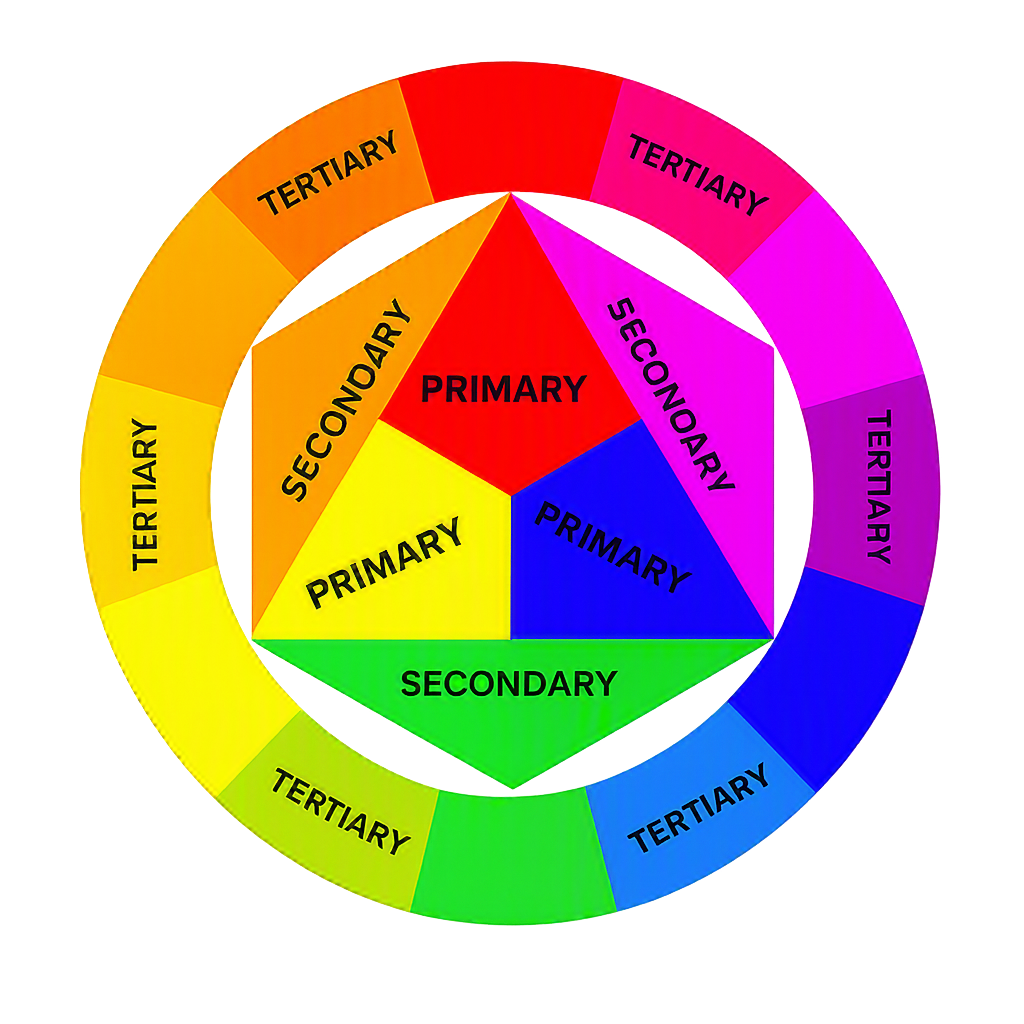
Four color schemes that always work
Most outfits that look great are built on one of these four formulas. Choose one as your starting point and the rest of your choices become much easier.
- Monochrome: one color worn in several shades and tones, for example a light blue shirt with navy trousers. It looks sleek and takes almost no effort to balance.
- Analogous: two or three colors that sit side by side on the wheel, such as green, teal, and blue. These feel harmonious because the eye reads them as related.
- Complementary: two colors from opposite sides of the wheel, like blue and orange or purple and yellow. This is the highest contrast option, so it makes a statement.
- Triadic: three colors evenly spaced around the wheel, such as red, yellow, and blue. It is playful and colorful, and it works best when one color leads and the others support.
Let neutrals do the heavy lifting
Neutrals are the quiet workhorses of any wardrobe: black, white, grey, navy, beige, brown, and denim all pair with nearly everything. If you are ever unsure how to match colors in an outfit, anchor the look with a neutral and add just one color on top. A camel coat over a burgundy sweater, or white sneakers with almost any bright piece, will always feel considered. Neutrals also let a single bold color breathe instead of competing for attention.
The 60-30-10 rule
Interior designers use this trick and it works just as well for clothing. Aim for roughly 60 percent of your outfit in a main color, 30 percent in a secondary color, and 10 percent in an accent. The main color is usually your largest pieces (coat, trousers, or dress), the secondary is a top or knit, and the accent is a small hit of color from shoes, a bag, or a scarf. This proportion keeps an outfit balanced instead of letting every color shout at once.
How many colors should one outfit have?
As a rule of thumb, two to three colors is the sweet spot for most looks, and that is counting neutrals. Two colors feels clean and modern, three adds interest without tipping into chaos, and four or more usually needs a confident eye to pull off. If you like a fuller palette, keep the extra colors small and repeat them: a pattern that already contains your accent color is a great way to add variety while staying coordinated.
Match the mood, not just the wheel
Color theory gives you the structure, but a few extra habits make the result feel personal. Warm colors (reds, oranges, and warm yellows) feel energetic and cozy, while cool colors (blues, greens, and purples) feel calm and crisp, so lean into whichever mood suits the day. Pay attention to the occasion too: softer, muted tones read as relaxed, while saturated colors read as dressed up. Finally, remember that texture counts. Two pieces in the same color but different fabrics, like a chunky knit and smooth trousers, add depth without adding a single new color.
Common color mistakes to avoid
- Wearing several strong, saturated colors at full strength, which makes them fight instead of flatter.
- Matching everything too perfectly, which can look flat. A little contrast keeps things interesting.
- Forgetting that undertones matter: a warm cream and a cool bright white can clash even though both are technically neutral.
- Ignoring your accessories. Belts, bags, and shoes are colors too, and they count toward your total.
Let MyStyle match colors for you
Once you know the theory, you can let the app handle the math. The MyStyle generator is built around exactly these color relationships, and you can set how many colors you want an outfit to use before it builds one for you. If you have shades that should never appear together, you can save your own combinations as custom palettes, or mark certain shades as strong colors so only one of them shows up per outfit. You can even exclude a color pairing you dislike so it never returns. Start by adding pieces to your wardrobe, pick your preferences, and let MyStyle assemble color-matched outfits from clothes you already own.